Method
- In a large mixing bowl (at least 4-quart capacity), stir together the 1 cup warm milk, 1/4 cup warm water, and 2 1/4 tsp active dry yeast. The liquid should feel like a warm bath, not hot - if it feels hot to the inside of your wrist, let it cool a minute, because water above 120 F will kill the yeast and your bread will not rise. Let this sit undisturbed for 5 to 10 minutes until it looks foamy and smells yeasty; if you see no foam at all, your yeast is dead and you need a fresh packet before continuing.
- Whisk the 3 tbsp sugar, 3 tbsp melted (cooled) butter, and 1 egg into the foamy yeast mixture until combined. Add the 1 3/4 tsp salt and 4 cups flour, one cup at a time, stirring with a wooden spoon after each addition. The dough will start shaggy and sticky and pull away from the spoon as the last cup goes in.
- Turn the dough out onto a clean, lightly floured countertop. Knead by hand for 8 to 10 minutes: push the dough away with the heel of your hand, fold it back over itself, give it a quarter turn, and repeat. The dough is ready when it turns smooth, elastic, and slightly tacky but no longer sticks to your fingers when poked - if it's still tearing or shaggy, keep kneading, this structure is what traps the gas bubbles that make bread rise.
- Shape the dough into a ball and place it in a large, lightly oiled bowl, turning once so the top is coated in oil (this prevents a dry skin from forming). Cover the bowl tightly with plastic wrap or a damp kitchen towel and set it in a warm, draft-free spot (like an unheated oven with the light on) for 60 to 90 minutes, or until doubled in size. Test doneness by pressing two fingers into the dough - if the indent stays, it's ready; if it springs back immediately, give it more time.
- Grease a 9x5-inch loaf pan generously with the 1 tbsp softened butter, making sure to coat the corners so the loaf won't stick. Punch down the risen dough gently with your fist to release the large air bubbles.
- On a lightly floured surface, pat the dough into a rough rectangle about 9 inches wide and 12 inches long. Starting from a short end, roll it up tightly like a jelly roll, pinching the seam closed with your fingers, then pinch the two ends closed and tuck them under slightly.
- Place the loaf seam-side down into the prepared pan. Cover loosely with the damp towel again and let it rise a second time in that same warm spot for 30 to 45 minutes, until the center of the dough crowns about 1 inch above the rim of the pan. Do not let it over-rise past this point or the loaf may collapse in the oven.
- About 15 minutes before baking, preheat your oven to 350 F with a rack in the center position. An accurate oven temperature matters here - if you have an oven thermometer, use it, since a too-hot oven will brown the crust before the inside finishes baking.
- Bake the loaf for 30 to 35 minutes, rotating the pan front to back halfway through for even browning. The bread is done when the top is deep golden brown and, when you carefully tip it out of the pan and tap the bottom crust with a knuckle, it sounds hollow rather than dense or thudding.
- Immediately after baking, brush the top crust with the 1 tbsp melted butter for a soft, shiny finish. Turn the loaf out of the pan onto a wire cooling rack right away so the bottom doesn't turn soggy from trapped steam.
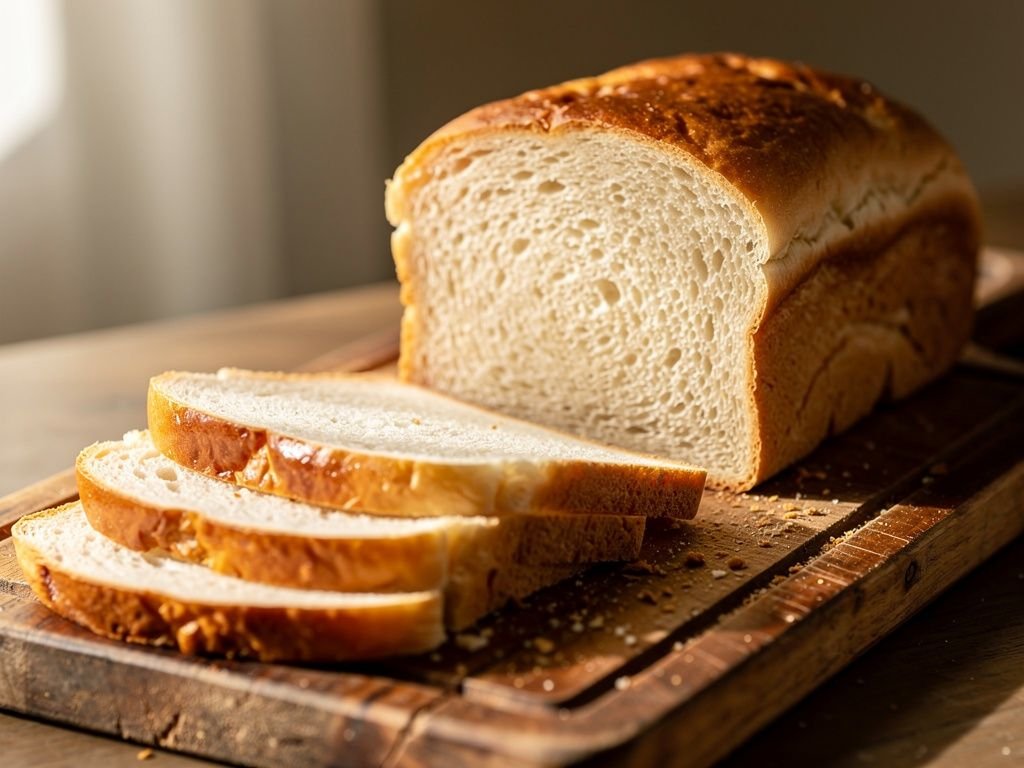
- Let the loaf cool completely on the rack for at least 1 hour before slicing - cutting into hot bread squashes the crumb and releases too much steam, making it seem gummy even though it's fully baked.
- Slice with a serrated bread knife using a gentle sawing motion rather than pressing straight down, which will crush the soft crumb.
Tips
If your kitchen is cold, the 'warm oven with the light on' trick in step 4 is the most reliable proofing spot - a true oven turned on will get too hot and kill the yeast.
Test water temperature with a kitchen thermometer if you have one; 110 F should feel warm, like bathwater, never hot to the touch.
 ImpRecipe