Method
- In a medium bowl, toss the cubed chicken thighs with 1 tablespoon soy sauce and 1 tablespoon cornstarch until every piece is coated in a thin, slightly tacky paste. Let it sit at room temperature for 15 minutes while you prep everything else; this coating keeps the chicken juicy in the hot wok.
- In a small bowl, whisk together 3 tablespoons soy sauce, the vinegar, sugar, 1 tablespoon cornstarch, and 3 tablespoons water until no lumps remain. Set this sauce next to the stove; once cooking starts you will not have time to measure anything.
- Have all your other ingredients (chiles, peppercorns, garlic, ginger, green onions, bell pepper, peanuts) sitting in small bowls right next to the stove. Stir-frying moves fast, so everything must be cut and ready before the pan gets hot.
- Set a wok or large 12-inch nonstick skillet over high heat and add 2 tablespoons of the vegetable oil. Heat until the oil looks shimmery and a wisp of white smoke just begins to rise, about 90 seconds; this means it is hot enough to sear rather than steam the chicken.
- Add the marinated chicken in a single layer (work in two batches if it does not fit without crowding). Let it sear undisturbed for 60 seconds so a light golden crust forms, then stir-fry for another 2 to 3 minutes until no pink remains and the internal temperature reads at least 165 degrees F on an instant-read thermometer. Remove chicken to a clean plate.
- Add the remaining 1 tablespoon oil to the same wok. Toss in the dried chiles and Sichuan peppercorns and stir constantly for 20 to 30 seconds until they turn fragrant and slightly darker; watch closely, since chiles can jump from fragrant to burnt-bitter in just a few extra seconds.
- Add the garlic, ginger, and the white parts of the green onions. Stir-fry for 20 seconds, just until you smell the garlic go from raw and sharp to fragrant and slightly sweet; do not let it brown or it will taste bitter.
- Add the red bell pepper and stir-fry for 1 to 2 minutes until it is bright red and just barely tender-crisp, still with a slight snap when you bite it.
- Return the chicken (and any juices from the plate) to the wok. Give the sauce a quick re-whisk (the cornstarch settles) and pour it in. Stir constantly for 30 to 60 seconds; the sauce will go from thin and cloudy to glossy and thick enough to coat the back of a spoon.
- Add the peanuts and the green parts of the green onions. Toss everything together for 15 seconds just to combine and warm the peanuts through; adding them at the very end keeps them crunchy instead of soggy.
- Turn off the heat immediately once the sauce is glossy and clinging to the chicken; an extra minute on the heat will break the sauce and make it gummy.
- Taste a piece of chicken with a bit of sauce; if it tastes flat, stir in an extra splash of soy sauce or a pinch of sugar to balance salty and sweet.
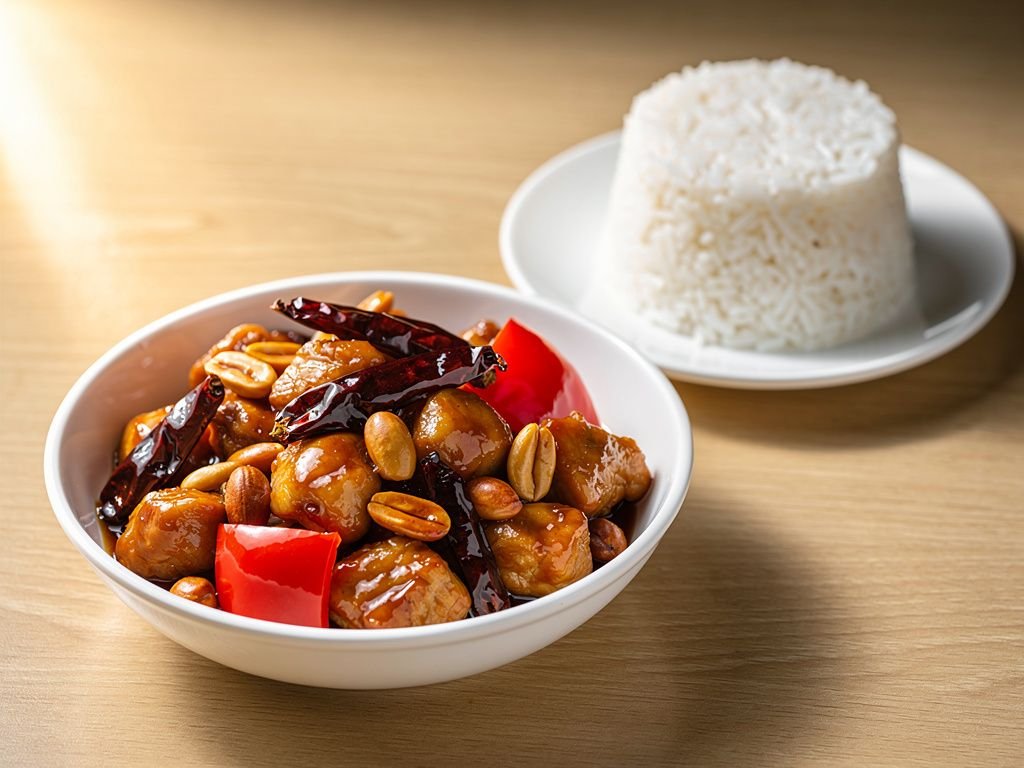
- Spoon the kung pao chicken over the cooked rice and serve immediately while the peppers are still crisp and the sauce is hot and glossy.
Tips
Cutting the chicken into uniform 3/4-inch cubes is what lets every piece finish cooking at the same time without any raw or overcooked pieces.
If you like it milder, leave the dried chiles whole instead of snipping them open; you get the smoky aroma with much less heat.
 ImpRecipe