Method
- In a bowl, combine the sliced beef with the soy sauce, 1 tablespoon sesame oil, sugar, and minced garlic. Toss to coat and let marinate at room temperature for 15 to 20 minutes while you prepare the vegetables.
- Bring a small pot of water to a boil over high heat. Add the spinach and blanch for just 30 seconds until it wilts bright green; immediately drain and run under cold water to stop the cooking. Squeeze out excess water, then toss with a small pinch of salt and a few drops of sesame oil. Set aside in a small bowl.
- Heat 1 teaspoon of vegetable oil in a large skillet over medium heat. Add the julienned carrots with a pinch of salt and stir-fry for 2 to 3 minutes until just tender-crisp with a slight bite remaining. Transfer to a separate small bowl and wipe the pan clean.
- Repeat the same process with the zucchini: a teaspoon of oil, a pinch of salt, and 2 to 3 minutes of stir-frying until just tender, then transfer to its own bowl and wipe the pan clean between vegetables so the flavors and colors stay distinct.
- Heat another teaspoon of oil in the pan and stir-fry the sliced shiitake mushrooms with a pinch of salt for 3 to 4 minutes until they soften and release their liquid, then the liquid evaporates and the mushrooms turn slightly browned at the edges. Transfer to a bowl.
- Blanch the bean sprouts in the same boiling water used for the spinach for 2 minutes until just tender but still crunchy. Drain, toss with a pinch of salt and a few drops of sesame oil, and set aside.
- Wipe the skillet clean and heat 1 tablespoon vegetable oil over high heat until shimmering and just beginning to smoke lightly. Add the marinated beef in a single layer and let it sear undisturbed for 1 minute, then stir-fry for another 1 to 2 minutes until no pink remains and the edges look caramelized. Remove from heat.
- Wipe the skillet once more and reduce the heat to medium. Add the remaining 1 tablespoon oil and crack in the eggs, spacing them apart (cook in two batches if your pan is small). Fry for 2 to 3 minutes until the whites are fully set and opaque but the yolks are still soft and jammy in the center; this soft yolk becomes part of the sauce for the whole bowl once broken.
- Divide the warm cooked rice among four large bowls, spreading it in an even layer across the bottom of each.
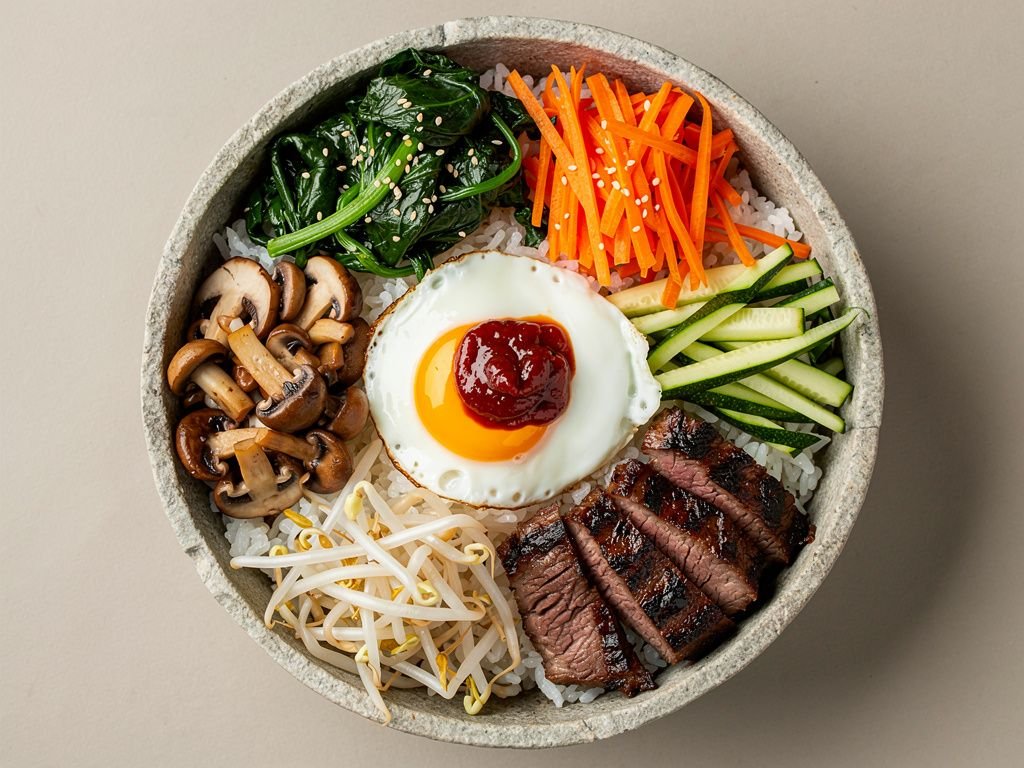
- Arrange the seasoned spinach, carrots, zucchini, mushrooms, bean sprouts, and beef in separate small piles around the edge of the rice in each bowl, keeping the colors distinct rather than mixed, in the traditional bibimbap style.
- Top each bowl with a fried egg placed right in the center.
- Add a generous tablespoon of gochujang to the center of each bowl (or serve it on the side for those who want less spice), and sprinkle everything with toasted sesame seeds.
- Serve immediately with instructions to mix everything together vigorously with a spoon at the table just before eating, breaking the egg yolk into the rice so it coats every bite.
Tips
Cooking each vegetable separately and wiping the pan between batches keeps every topping's color and flavor distinct instead of everything turning a muddy uniform brown.
Do not mix the bowl until you are ready to eat; bibimbap is meant to be composed beautifully first, then stirred together tableside so the rice on the bottom stays hot and the toppings stay vibrant until the last moment.
 ImpRecipe