Method
- Heat the olive oil in a large pot or Dutch oven over medium heat until it shimmers. Add the onion, carrots, and celery and cook, stirring occasionally, for 6 to 7 minutes until the onion turns translucent and the vegetables begin to soften; this base is called a mirepoix and it builds the soup's foundation of flavor.
- Add the garlic and cook for 30 seconds, stirring constantly, until fragrant, being careful not to let it brown or it will taste bitter.
- Pour in the chicken broth and add the chicken breasts, bay leaves, thyme, salt, and pepper. Increase the heat to high and bring the liquid to a boil.
- Once boiling, reduce the heat to low so the soup is at a gentle simmer with small bubbles, cover partially with a lid, and cook for 20 to 25 minutes, until an instant-read thermometer inserted into the thickest part of the chicken reads 165 F.
- Using tongs, transfer the cooked chicken to a cutting board and let it cool for 5 minutes, just until you can handle it safely without burning your fingers.
- While the chicken cools, taste the broth and adjust the seasoning if needed; the flavor should taste rounded and savory, not flat, so add more salt in small pinches if it tastes thin.
- Bring the soup back to a gentle boil and add the egg noodles. Cook according to the package time, usually 6 to 8 minutes, stirring occasionally so the noodles don't stick to the bottom of the pot or to each other.
- While the noodles cook, use two forks to shred the cooled chicken into bite-sized pieces, pulling the meat apart along the grain.
- Once the noodles are tender but still have a slight bite (test one by tasting it), stir the shredded chicken back into the pot and let everything heat through for 2 minutes.
- Remove and discard the bay leaves, then taste one final time and adjust salt and pepper as needed.
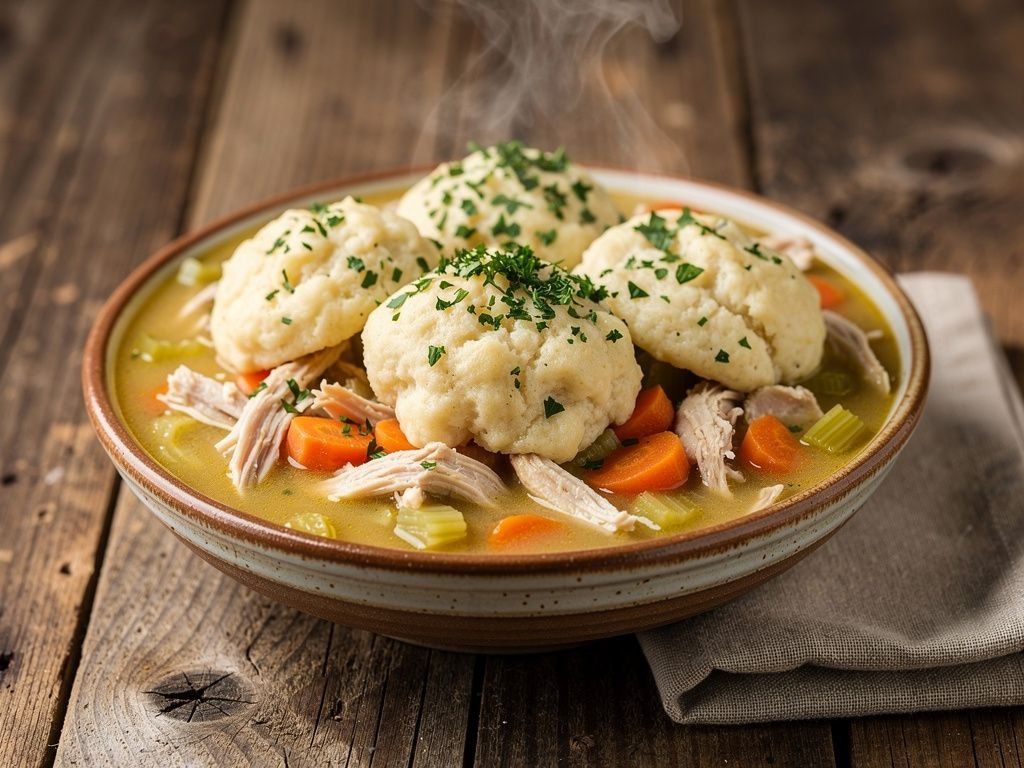
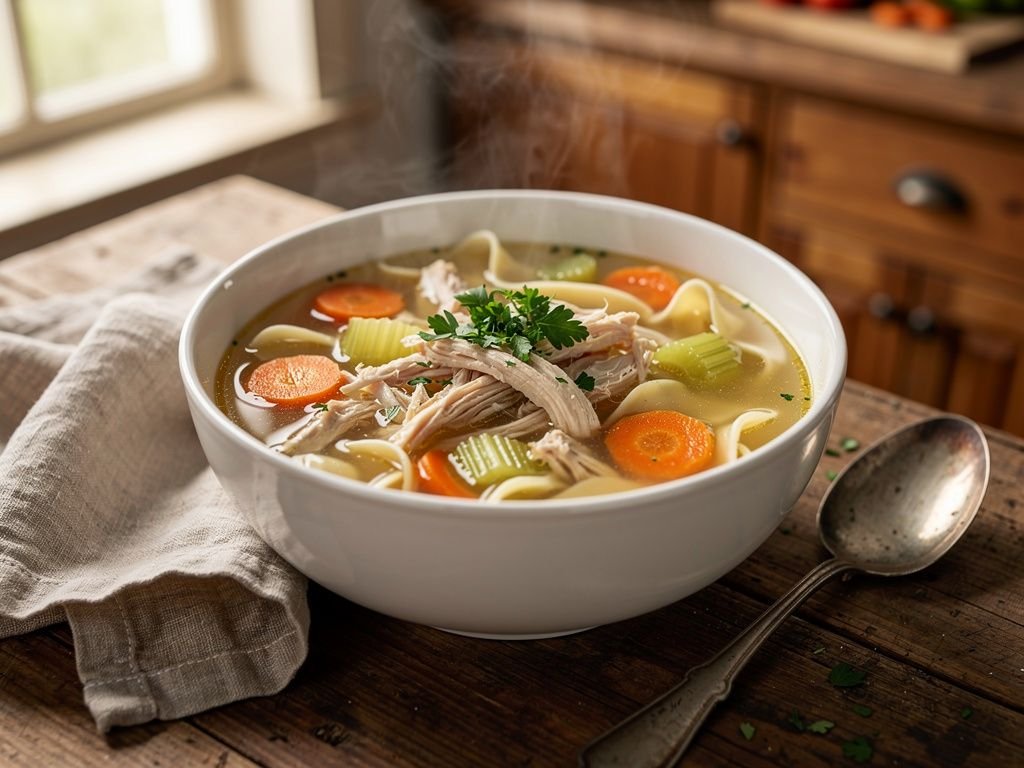
- Ladle the soup into bowls and top each serving with a sprinkle of fresh parsley before serving hot.
Tips
Poaching the chicken directly in the broth, rather than cooking it separately, means all its flavor stays in the soup instead of going down the drain.
If freezing leftovers, leave the noodles out and add freshly cooked ones when reheating, since noodles get mushy and swollen after freezing in liquid.
 ImpRecipe