Method
- Preheat your oven to 425 F and line a baking sheet with parchment paper.
- In a large bowl, whisk together the 2 cups flour, 1 tablespoon baking powder, 1/2 teaspoon baking soda, and 1 teaspoon salt.
- Add the 1/2 cup very cold cubed butter to the flour mixture. Using your fingertips or a pastry cutter, work the butter into the flour quickly until the mixture looks like coarse crumbs with some pea-sized pieces of butter still visible; keeping the butter cold and in small chunks is what creates flaky layers, so work fast before it softens.
- Make a well in the center and pour in the 3/4 cup cold buttermilk. Stir with a fork just until a shaggy dough comes together; it will look messy and that is correct, since overmixing at this stage makes tough, dense biscuits.
- Turn the dough out onto a lightly floured surface and pat it gently into a rectangle about 1 inch thick, using your hands rather than a rolling pin to keep from compressing it too much.
- Fold the dough in half, then pat it back out to 1 inch thick; repeat this fold-and-pat process 2 more times to build flaky layers, then pat the dough to its final 1 inch thickness.
- Using a round biscuit cutter or a floured drinking glass about 2.5 inches wide, cut straight down without twisting (twisting seals the edges and prevents rising) to cut out biscuits, pressing scraps back together gently to cut more, for about 8 biscuits total.
- Place the biscuits on the prepared baking sheet so their sides are just touching, which helps them rise up tall instead of spreading out, and brush the tops with the remaining 1 tablespoon buttermilk.
- Bake in the preheated 425 F oven for 14 to 16 minutes, until the tops are golden brown and a biscuit sounds slightly hollow when tapped on the bottom.
- While the biscuits bake, cook the 1 pound breakfast sausage in a large skillet over medium heat, breaking it into small crumbles with a wooden spoon, for 7 to 8 minutes until browned and no pink remains, reaching an internal temperature of 160 F, then sprinkle the 1/4 cup flour evenly over the cooked sausage and its fat and stir constantly for 1 to 2 minutes to cook off the raw flour taste; this forms the base (a roux) that will thicken the gravy.
- Slowly pour in the 3 cups milk while whisking constantly to prevent lumps. Bring the mixture to a gentle simmer over medium heat, stirring frequently, which will take about 5 to 6 minutes.
- Reduce heat to low and continue simmering, stirring often, for another 5 minutes until the gravy has thickened enough to coat the back of a spoon; it will continue to thicken slightly as it sits, so it is fine if it still looks a touch thin.
- Stir in the 1 teaspoon black pepper and 1/2 teaspoon salt, then taste and adjust seasoning, adding more pepper for a more traditional peppery gravy.
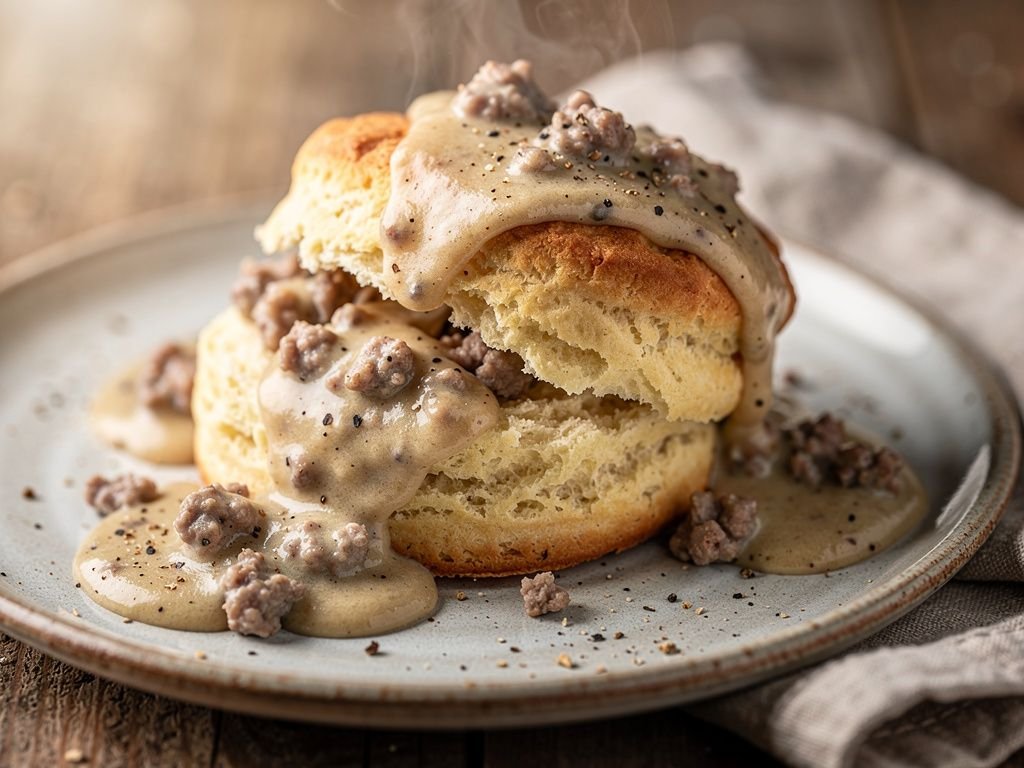
- Split warm biscuits in half and ladle the hot sausage gravy generously over the top before serving immediately.
Tips
Cutting the biscuits straight down without twisting the cutter is a small step that makes a real difference in how tall and even they rise.
Whisk the milk in gradually and keep stirring; a gravy that looks too thin at first will thicken further as it simmers, so avoid the urge to add extra flour too soon.
 ImpRecipe