Method
- In a large, heavy-bottomed pot or Dutch oven (at least 5-quart capacity), heat the olive oil and 2 tablespoons of the butter over medium heat until the butter melts and foams slightly.
- Add the diced onion, carrot, and celery (the soffritto) and cook for 8 to 10 minutes, stirring occasionally, until the vegetables soften completely and the onion turns translucent but does not brown; this slow start builds the sauce's sweet, savory base, so resist the urge to rush it with higher heat.
- Increase the heat to medium-high, add the ground beef and ground pork, and break the meat into small crumbles with a wooden spoon; season with 1 teaspoon salt and the black pepper.
- Cook the meat for 8 to 10 minutes, stirring occasionally, until it is deeply browned all over (not just gray) and reaches an internal temperature of 160 degrees F, since good browning here is where most of the sauce's savory depth comes from.
- Pour in the white wine, stirring to scrape up any browned bits stuck to the bottom of the pot, and simmer for 4 to 5 minutes until the wine has almost fully evaporated and you no longer smell raw alcohol.
- Reduce the heat to medium-low, pour in the whole milk and nutmeg, and simmer gently for 8 to 10 minutes, stirring occasionally, until the milk is mostly absorbed and the meat looks pale and tender; this classic step tenderizes the meat and rounds out the acidity of the tomatoes added next.
- Stir in the crushed tomatoes, tomato paste, 2 cups of broth, and bay leaves, stirring until the tomato paste is fully dissolved into the liquid with no dry lumps remaining.
- Bring the sauce to a bare simmer, with just a few small bubbles breaking the surface, then reduce the heat to low, cover partially with a lid leaving a small gap, and cook for 2 1/2 to 3 hours, stirring every 20 to 30 minutes to prevent sticking and scorching on the bottom.
- Check the sauce every 30 minutes and add an extra splash of broth or water, 1/4 cup at a time, whenever it looks like it's drying out or sticking, since the goal is a slow, gentle simmer, not a hard boil that would toughen the meat.
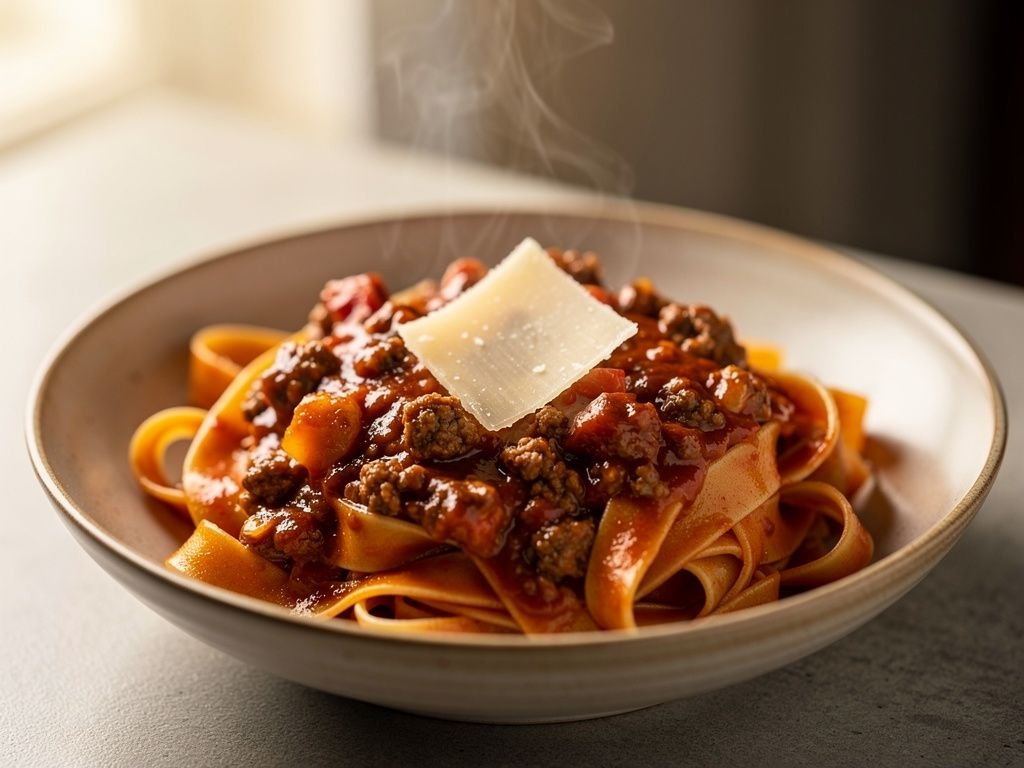
- After about 3 hours, the sauce should look thick, glossy, and deep brick-red to brown, with the fat separating slightly at the edges and the meat falling apart tender when pressed with a spoon; remove and discard the bay leaves.
- Taste the sauce and adjust the seasoning with more salt as needed, keeping in mind the Parmesan added later will bring more saltiness.
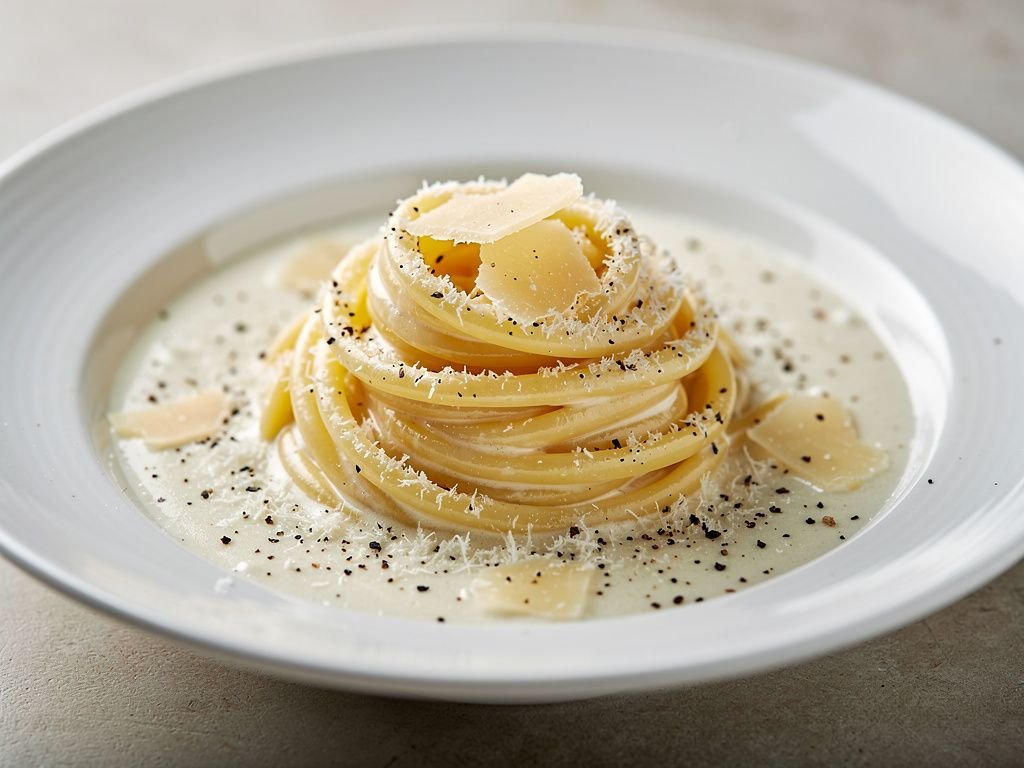
- About 15 minutes before the sauce is finished, bring a large pot (6 quarts) of water to a boil, add 2 tablespoons kosher salt, then cook the tagliatelle according to the package directions until just tender with a slight bite, about 2 to 3 minutes for fresh or 8 to 10 minutes for dried.
- Reserve 1/2 cup of the pasta water, then drain the tagliatelle without rinsing and add it directly into the pot with the bolognese sauce, along with the remaining 1 tablespoon butter, tossing gently with tongs to coat every ribbon.
- If the sauce seems too thick to coat the pasta evenly, add the reserved pasta water 2 tablespoons at a time, tossing until glossy, then stir in the 1/2 cup Parmesan and divide among 6 warmed bowls, topping with extra Parmesan.
Tips
Do not rush the browning of the meat or the long simmer; both steps are where nearly all of the sauce's savory depth develops, and shortening either one results in a thinner, flatter-tasting ragu.
Simmer the sauce at the gentlest possible bubble, checking and stirring regularly, since a hard boil over several hours will make the meat tough instead of meltingly tender.
 ImpRecipe