Method
- Bring a large pot (6 quarts) of water to a rolling boil over high heat and stir in 2 tablespoons kosher salt until dissolved, since this seasons the pasta and adds starch to the water for the sauce.
- While the water heats, crack the 4 whole eggs and 2 egg yolks into a medium heatproof bowl, add the 1 1/2 cups Pecorino Romano and 1 teaspoon black pepper, and whisk vigorously until the mixture looks pale, thick, and fully combined with no streaks of egg white; set this bowl near the stove.
- Place a large, cold skillet (12-inch) on the stove and add the diced guanciale, then turn the heat to medium; cooking it from a cold pan renders the fat slowly instead of scorching the meat immediately.
- Cook the guanciale for 7 to 9 minutes, stirring occasionally, until it turns deep golden brown and crisp at the edges and has released about 3 to 4 tablespoons of fat into the pan; turn off the heat once it looks crispy and set the skillet aside, leaving the fat in the pan.
- Add the spaghetti to the boiling water and cook for 1 minute less than the package's minimum time, stirring occasionally, until just shy of tender with a firm bite in the center.
- Just before draining, scoop out 1 cup of the starchy pasta water into a heatproof cup, since you'll need this to both temper the eggs and loosen the final sauce.
- Drain the spaghetti in a colander, shaking off excess water, then immediately add it to the skillet with the guanciale and fat, tossing over very low heat for about 30 seconds so the noodles soak up the fat.
- Turn off the heat completely and let the skillet sit for 1 minute so it cools slightly; this step is critical, because adding raw egg to a pan that's too hot will scramble it into curds instead of forming a silky sauce.
- Slowly drizzle about 1/4 cup of the reserved hot pasta water into the egg and cheese mixture while whisking constantly, which gently warms the eggs (called tempering) so they won't scramble when added to the hot pasta.
- Pour the tempered egg mixture over the spaghetti in the skillet, off the heat, and toss immediately and continuously with tongs for about 1 minute, lifting the noodles high to help them cool slightly and coat evenly; the residual heat from the pasta and pan will gently cook the eggs into a thick, glossy sauce.
- If the sauce looks too thick or the noodles are dry and clumping, add the remaining reserved pasta water 1 to 2 tablespoons at a time, tossing constantly, until the sauce turns creamy and coats the back of a spoon without looking scrambled or watery.
- Taste and season with a little more black pepper if desired; you likely won't need extra salt since the Pecorino and guanciale are both salty.
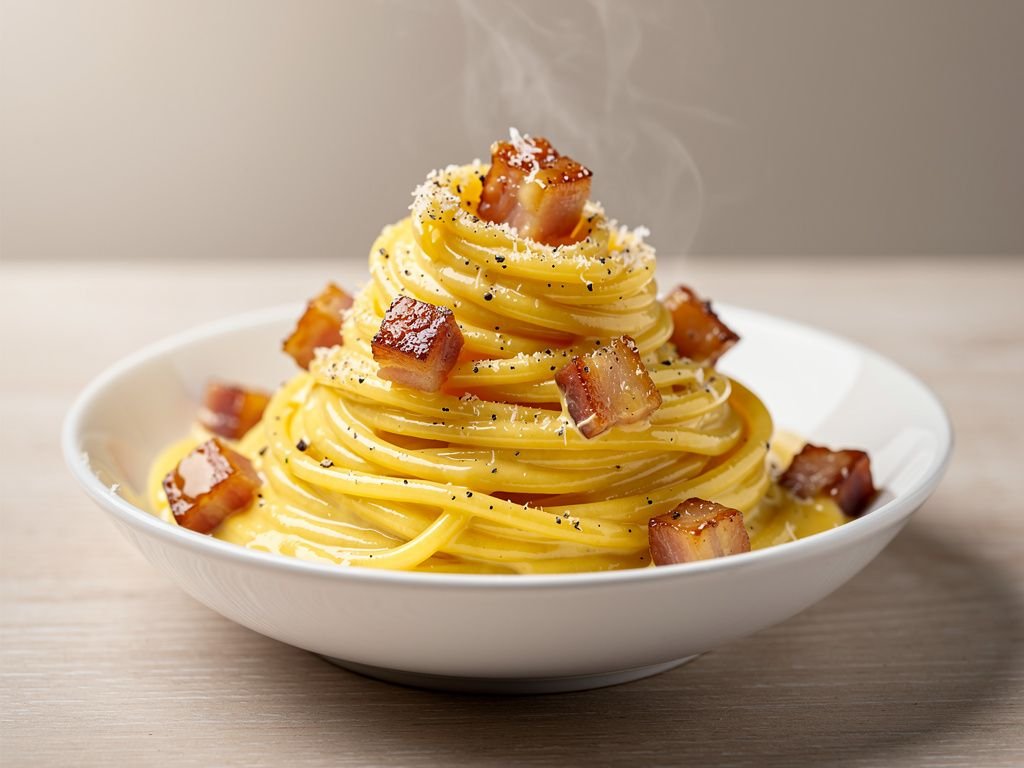
- Divide the carbonara among 4 warmed bowls immediately, since the sauce will continue to thicken and can become gummy if it sits too long, and finish with extra grated Pecorino and cracked black pepper.
Tips
Take the skillet off the heat entirely before adding the egg mixture; this is the single most important step to avoid ending up with scrambled egg spaghetti instead of a creamy sauce.
Toss the pasta constantly and quickly once the eggs go in, since keeping the noodles moving is what lets the sauce thicken evenly without any part of it overcooking.
 ImpRecipe