Method
- Soak the rice noodles in a large bowl of room-temperature water for 30 to 45 minutes until they are flexible and bend without snapping but are still firm in the center (they will finish cooking in the wok). Drain well and set aside; do not use hot water or they will turn mushy before they even hit the pan.
- While the noodles soak, whisk together the tamarind concentrate, fish sauce, brown sugar, and lime juice in a small bowl until the sugar dissolves. Taste it: it should taste strongly sweet, salty, and sour all at once, since this concentrated sauce will season the entire dish. Set aside.
- Pat the shrimp completely dry with paper towels; wet shrimp will steam instead of sear.
- Heat 1 tablespoon of the vegetable oil in a wok or large 12-inch nonstick skillet over high heat until shimmering. Add the shrimp in a single layer and sear for 1 minute per side until they turn pink and opaque and reach an internal temperature of 145 degrees F. Remove to a plate immediately; overcooked shrimp turn rubbery within a minute of being done.
- Add another tablespoon of oil to the same wok. Add the tofu cubes and fry for 3 to 4 minutes, turning occasionally, until golden and slightly crisp on the edges. Remove to the plate with the shrimp.
- Add the remaining 1 tablespoon oil and the garlic to the wok, stir-frying for 15 to 20 seconds until fragrant but not browned.
- Push the garlic to one side, pour the beaten eggs into the empty space, and let them sit for 10 seconds before scrambling them into small curds with a spatula, about 30 seconds total.
- Add the drained noodles to the wok along with the tamarind sauce. Using tongs, toss continuously for 2 to 3 minutes, lifting and folding the noodles so they cook evenly and absorb the sauce; the noodles should turn slightly translucent and glossy, and any that are still stiff will soften as they absorb the hot sauce.
- If the noodles look dry or are sticking to the pan before they are fully tender, add 1 to 2 tablespoons of water and keep tossing; a dry pan is the most common cause of clumped, undercooked pad thai.
- Return the shrimp and tofu to the wok along with 1 cup of the bean sprouts and the green onions. Toss for 1 minute, just until everything is heated through and the sprouts are still crunchy.
- Remove the wok from the heat and taste a noodle strand with a bit of sauce; adjust with an extra squeeze of lime for sourness, a pinch of sugar for sweetness, or a dash of fish sauce for saltiness.
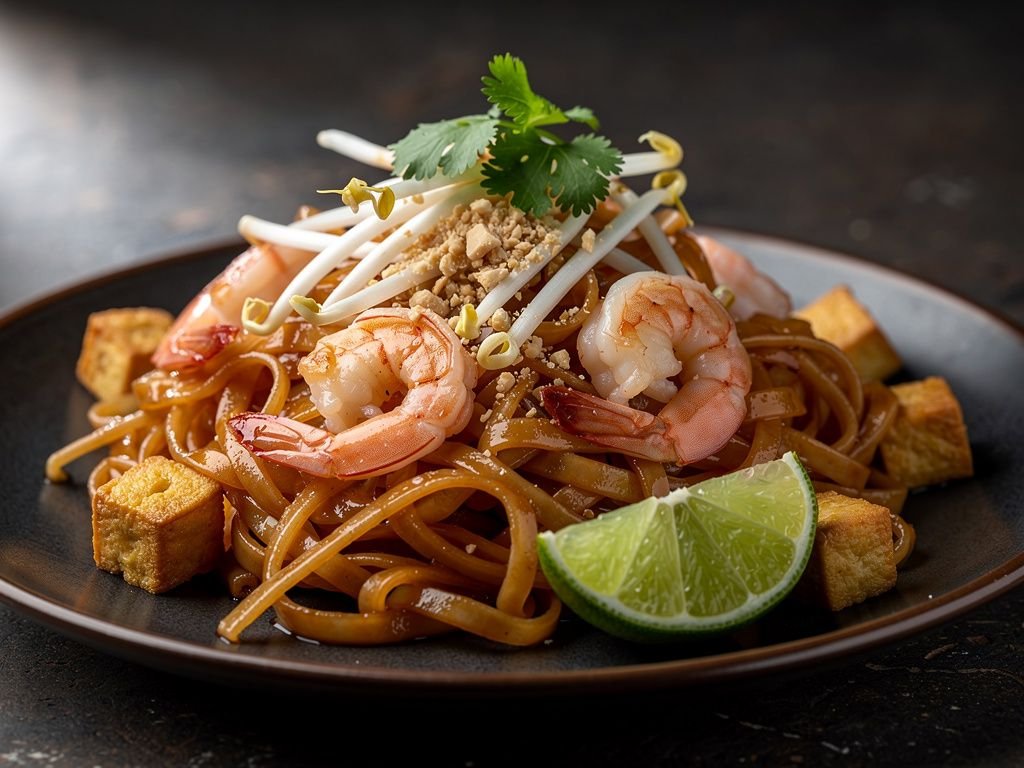
- Transfer to serving plates and top with the remaining raw bean sprouts, chopped peanuts, and a pinch of red chile flakes.
- Serve immediately with lime wedges on the side for squeezing over each bite.
Tips
Room-temperature soaking rather than boiling the noodles is the single most important step; boiled noodles will fall apart into mush once they hit the hot wok.
Prep and portion every ingredient before you turn on the stove; once the wok is hot, pad thai moves too fast to stop and chop something.
 ImpRecipe