Method
- Cut the shrimp into 1/2-inch pieces so the citrus juice can penetrate quickly and evenly. Cutting shrimp raw before curing is the safest and most common way to make ceviche at home.
- Place the cut shrimp in a non-reactive glass or ceramic bowl (avoid plain aluminum or plastic that can react with the acid) and pour the lime juice and lemon juice over them, making sure every piece is fully submerged.
- Cover and refrigerate for 20 to 30 minutes, stirring once halfway through. The shrimp are ready when they turn from translucent gray to opaque white and pink all the way through and feel firm, similar to cooked shrimp; this is a real chemical change caused by the acid, not just marinating.
- Do not cure the shrimp for longer than about 30 minutes, since over-curing in acid will make the texture tough and rubbery rather than tender.
- While the shrimp cures, prepare the vegetables: finely dice the red onion and jalapeno, and dice the tomatoes and cucumber, keeping the pieces small and roughly the same size as the shrimp for an even bite.
- Once the shrimp is fully opaque, drain off about half of the lime-lemon juice and discard it, reserving the shrimp and the rest of the liquid; this keeps the ceviche from becoming a soup while still leaving enough juice to season everything.
- Add the diced red onion, jalapeno, tomatoes, and cucumber to the shrimp and gently toss to combine.
- Fold in the diced avocado and chopped cilantro very gently with a rubber spatula so the avocado stays in intact cubes rather than mashing into the mixture.
- Season with the salt and hot sauce if using, then taste and adjust with a little more salt or lime juice as needed; ceviche should taste bright and well-seasoned, not flat.
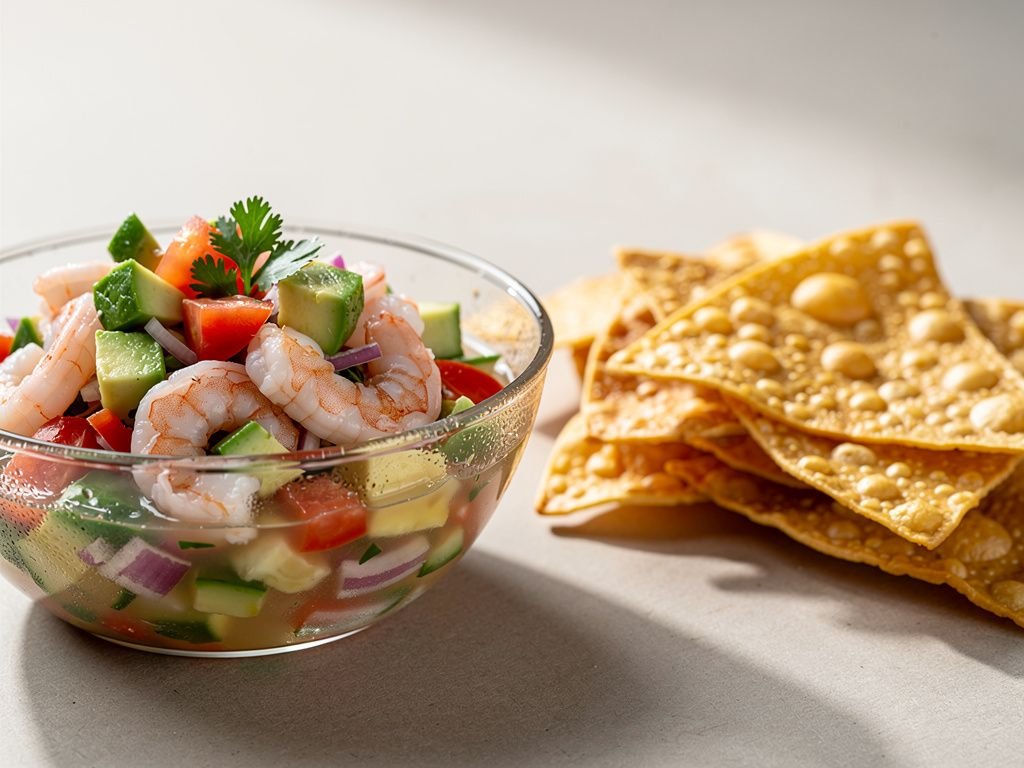
- Serve immediately in small bowls or glasses with tortilla chips or crackers alongside for scooping. Ceviche is best eaten the same day it is made, since the avocado and cucumber lose their texture on standing.
Tips
Use the freshest raw shrimp you can find (or previously frozen and fully thawed shrimp labeled for raw consumption); the flavor and texture depend entirely on quality here.
Check doneness by color and firmness, not by time alone, since limes vary in acidity and curing speed can differ batch to batch.
 ImpRecipe