Method
- Remove the small, tough side muscle (a little flap on the side of each scallop) if it is still attached, and discard it; it stays chewy no matter how it is cooked.
- Lay the scallops on a plate lined with paper towels and press another paper towel firmly on top to blot every side completely dry, then let them sit uncovered in the fridge for 10 minutes if time allows. Moisture is the single biggest obstacle to a good sear, since wet scallops will steam instead of browning.
- Season the scallops on both flat sides with 1/2 teaspoon of the salt and all of the pepper right before cooking; salting too early draws out more moisture.
- Heat a large stainless steel or cast iron skillet over medium-high heat for a full 2 to 3 minutes, then add the oil and swirl to coat. The pan and oil should be hot enough that a drop of water flicked into it sizzles and evaporates instantly.
- Working in two batches so the pan is not crowded, place the scallops flat-side down in the pan with at least 1/2 inch between each one. Crowding the pan drops the temperature and traps steam, which prevents browning.
- Do not move, shake, or peek under the scallops for 2 to 3 minutes. Resist the urge to check early; a proper golden-brown crust needs uninterrupted contact with the hot pan.
- Lift one edge with tongs to check: when a deep golden-brown crust has formed, flip each scallop and cook the second side for 1 to 2 minutes more, until the sides are firm and the center is just barely opaque, reaching an internal temperature of 115 to 120 F for a tender, slightly translucent center, or 130 F if you prefer fully opaque throughout.
- Transfer the seared scallops to a warm plate and tent with foil. Repeat with the second batch, adding a little more oil to the pan if it looks dry.
- Once all scallops are done, wipe out the pan with a paper towel to remove any burnt bits, then reduce the heat to medium-low and add 6 tablespoons of butter.
- Cook the butter, swirling the pan constantly, for 2 to 3 minutes until it foams, then the foam subsides and brown flecks form on the bottom of the pan and it smells nutty and toasted. Watch closely during this stage, since butter can go from perfectly browned to burnt in a matter of seconds.
- Immediately add the capers and garlic to the browned butter and swirl for 30 seconds, then remove the pan from the heat and stir in the lemon juice; the pan will sizzle and steam when the lemon juice hits, which is expected.
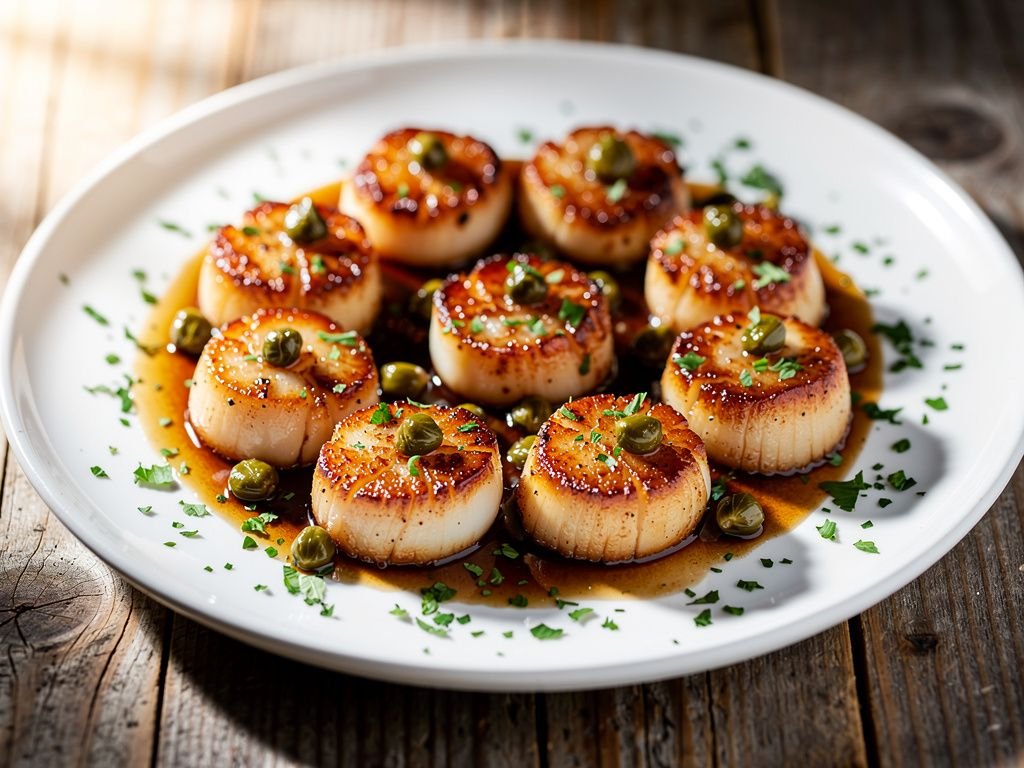
- Spoon the warm brown butter caper sauce over the scallops, sprinkle with parsley, and serve right away with lemon wedges.
Tips
Buy 'dry' scallops rather than 'wet' ones treated with a chemical solution; wet scallops release too much liquid to ever sear properly.
Once you add the garlic and capers to browning butter, work quickly; garlic burns almost instantly in butter this hot.
 ImpRecipe