Method
- Take the 3.5 lb chuck roast out of the fridge and pat it completely dry with paper towels; a dry surface is what lets it brown instead of steam. Season all over with 2 teaspoons salt and 1 teaspoon black pepper, pressing the seasoning in with your hands.
- Preheat your oven to 300 F. Set a large heavy pot or Dutch oven (at least 6 quarts) over medium-high heat and add 3 tablespoons vegetable oil; let it heat for 1-2 minutes until it shimmers and looks wavy.
- Carefully lower the roast into the pot away from you to avoid splashing. Sear undisturbed for 4-5 minutes per side, turning with tongs, until every side (including the fat edges) is deep brown, about 12-15 minutes total. Do not move it too soon or it will tear and stay pale; a good crust releases easily from the pot on its own.
- Remove the roast to a plate. Add the 2 chopped onions to the same pot and cook 3-4 minutes, stirring, until softened and picking up the browned bits (fond) from the bottom. Add 4 cloves minced garlic and cook 30 seconds until fragrant, not browned.
- Stir in 3 tablespoons tomato paste and cook 1-2 minutes, stirring constantly, until it darkens slightly in color; this deepens the flavor and prevents a raw, tinny taste later.
- Pour in 1 cup red wine (if using) and scrape the bottom of the pot firmly with a wooden spoon to lift up all the browned bits. Let it bubble for 1-2 minutes to cook off the raw alcohol smell.
- Add 3 cups beef broth, 2 bay leaves, and 1 teaspoon dried thyme. Nestle the seared roast back into the pot along with any juices from the plate; the liquid should come about halfway up the sides of the meat, not fully cover it.
- Bring the liquid to a gentle simmer on the stovetop (small bubbles breaking the surface), then cover the pot tightly with its lid and transfer to the preheated 300 F oven. Cook for 2 hours untouched.
- After 2 hours, carefully remove the pot (use oven mitts, the handles are very hot) and add the 4 carrots and 1.5 lb halved potatoes around the roast, tucking them into the liquid. Cover and return to the oven for 1 to 1.5 more hours, until a fork slides into the roast with almost no resistance and the internal temperature reads at least 195-205 F on an instant-read thermometer inserted into the thickest part; this high temperature is what breaks down the tough connective tissue into tender gelatin, well above the minimum 145 F safe temperature for beef.
- Lift the roast and vegetables onto a large platter using a slotted spoon and tongs; tent loosely with foil to keep warm. Discard the 2 bay leaves from the pot.
- Skim excess fat off the surface of the cooking liquid with a large spoon. In a small bowl, whisk 2 tablespoons flour with 2 tablespoons cold water until smooth, then whisk this slurry into the simmering pot liquid on the stovetop over medium heat; simmer 3-4 minutes, stirring often, until the gravy thickens enough to coat the back of a spoon.
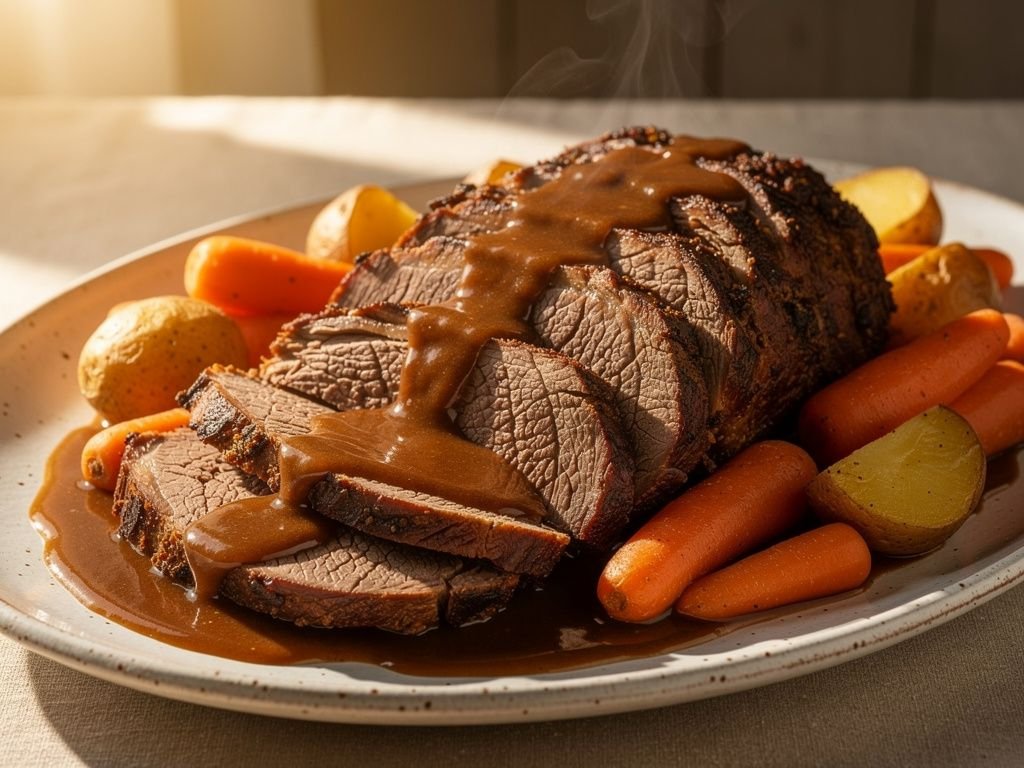
- Taste the gravy and add more salt and pepper as needed. Slice or shred the roast against the grain into thick pieces (it should fall apart easily) and serve with the carrots, potatoes, and gravy spooned generously over the top.
Tips
Do not skip the searing step; the browned crust and fond at the bottom of the pot are where most of the deep flavor in the final gravy comes from.
If the roast still feels tough when you check it, it needs more time, not less liquid or higher heat; low and slow is the only way to break down chuck's connective tissue.
 ImpRecipe