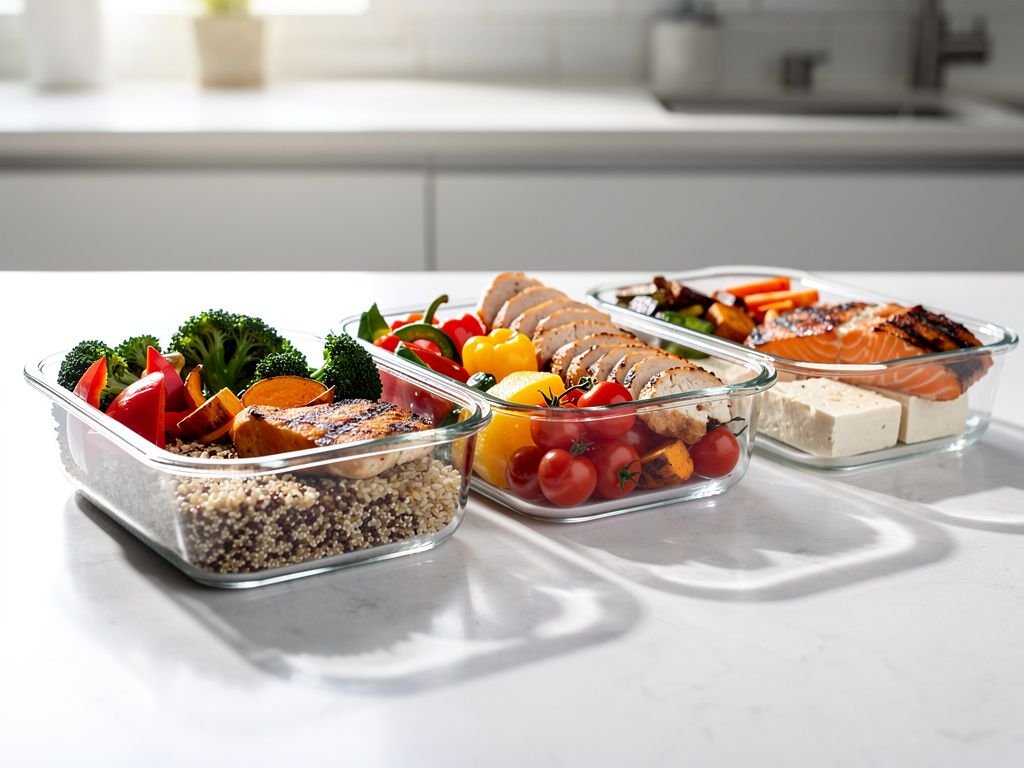
Meal prep has a reputation problem. For a lot of people, it conjures an image of identical plastic containers filled with plain chicken breast, broccoli, and rice, eaten cold at a desk five days in a row. Done well, meal prep does not have to mean eating the same meal all week. It means doing the tedious parts of cooking once, then assembling something different and satisfying each day in five minutes.
The biggest shift that makes meal prep enjoyable is separating your Sunday cooking into components rather than finished dishes. Instead of making five containers of the exact same casserole, roast two vegetables, cook two proteins, and prepare one or two grains or starches. On any given weekday, you mix and match: Monday might be roasted chicken with farro and a lemon vinaigrette, while Wednesday is the same chicken shredded into tacos with a quick slaw. Same base ingredients, completely different meals.
Start with anything that goes in the oven, since it needs the least hands-on attention. While vegetables and proteins roast, cook your grain on the stovetop and whisk together sauces. Save quick-cooking items, like eggs or delicate greens, for closer to when you plan to eat them, since they hold up poorly after a few days of refrigeration.
Store components separately rather than assembled. A grain bowl that sits together for four days turns mushy, but the same rice, chicken, and vegetables stored in separate containers and combined fresh each morning taste far better. Glass containers with tight lids are worth the investment; they do not absorb odors or stain the way some plastics do, and they can go straight from fridge to microwave.
Reheated food often tastes flat because it loses aromatic, high, bright notes during storage. Counteract this by adding something fresh right before eating: a squeeze of citrus, chopped herbs, a handful of raw greens, or a spoonful of yogurt. This one habit does more to make prepped food taste alive than almost anything else you can do.
A common mistake is prepping enough food for every single meal of the week, which guarantees boredom by Thursday. Instead, prep enough components for three or four days and plan one or two meals that use fresh ingredients or a quick new recipe. This keeps the week interesting while still saving you significant time on your busiest days.
Meal prep sessions typically take 60 to 90 minutes once you have a routine, which is far less than the cumulative time spent cooking from scratch every night. Put on a podcast, prep your components in the order above, and you will walk into a busy week with real meals within reach instead of relying on takeout out of exhaustion.
 ImpRecipe