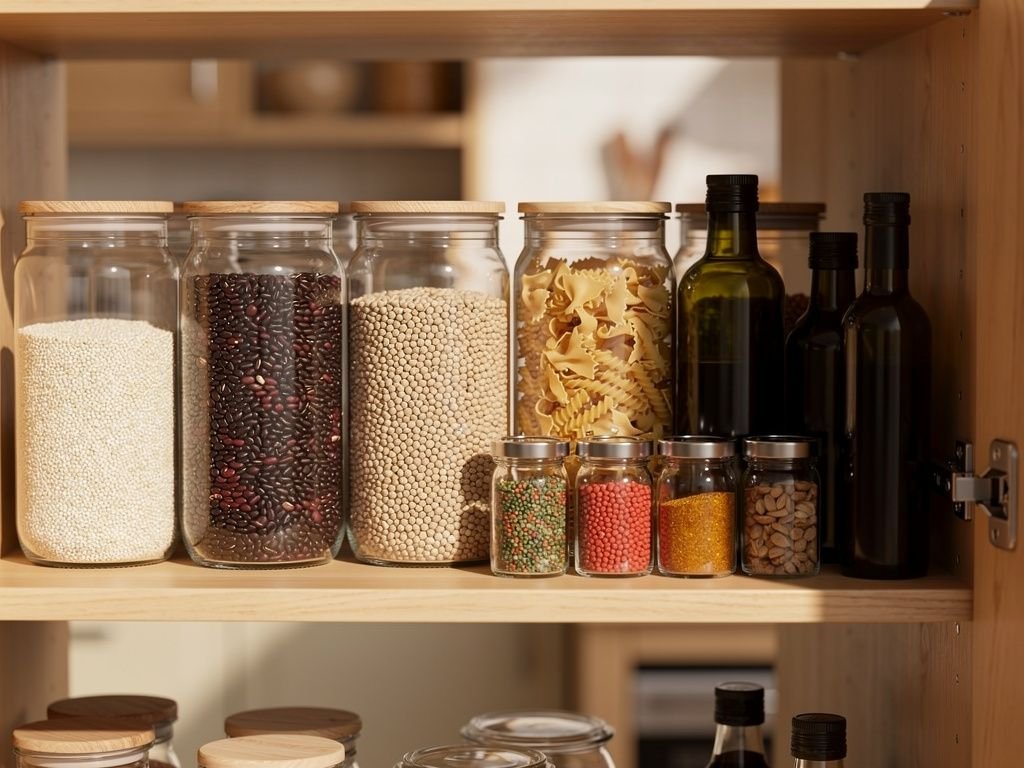
The difference between a kitchen that can produce dinner on short notice and one that cannot usually comes down to the pantry, not the skill of the cook. A well-stocked pantry turns 'I have nothing to eat' into a real meal built from what is already on the shelf. Here is what earns a permanent spot in ours.
Rice, pasta, and dried or canned beans form the backbone of countless meals and store for a long time without losing quality. Keep at least one long-grain rice, one short pasta shape, and both dried and canned beans on hand. Canned beans are ready in minutes, while dried beans, though slower, are cheaper and often have a better texture once cooked.
Onions, garlic, and ginger form the starting point of dishes across nearly every cuisine, and all three store well outside the refrigerator in a cool, dark spot. Keeping them on hand means you are never more than a few minutes from the base layer of flavor in a soup, stir-fry, or sauce.
You do not need forty spices to cook well; you need a smaller set used often enough that they stay fresh. Cumin, smoked paprika, chili flakes, a good curry powder, dried oregano, and whole black peppercorns cover an enormous range of cuisines on their own. Buy spices in smaller quantities more frequently rather than large jars that sit for years and lose potency.
Canned tuna and salmon, canned chickpeas and lentils, and shelf-stable tofu are all worth keeping around for nights when you have not shopped. A can of chickpeas can become a quick curry, a salad topping, or roasted into a crunchy snack, all from one item that keeps for a year or more in the cupboard.
A pantry only works if it is actually stocked when you need it. Keep a running list, either on paper or in a phone app, and add an item to it the moment you use the last of it rather than waiting until you are out and already need it. Doing a quick pantry check before each grocery trip takes less than five minutes and prevents the frustrating experience of reaching for the soy sauce only to find an empty bottle.
It is tempting to treat pantry stocking as a race to accumulate as many ingredients as possible, but a smaller pantry of ingredients you actually use and rotate through regularly beats a crowded one full of items bought for a single recipe and forgotten. Focus on staples that show up across many different meals, and your pantry will earn its keep every single week.
 ImpRecipe