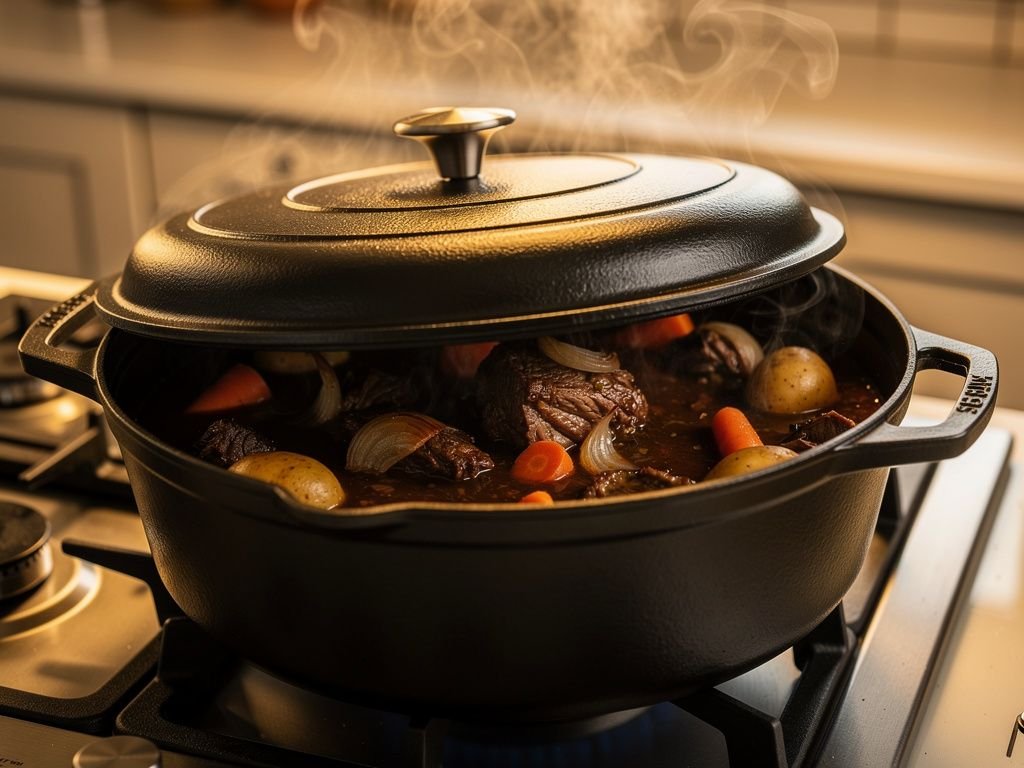
Of all the techniques in a home cook's toolkit, braising might offer the best return on effort. It asks very little of you in terms of active work, forgives minor timing mistakes, and takes cuts of meat that are tough and inexpensive when cooked quickly and turns them meltingly tender given enough time. Once you understand the basic method, you can apply it to almost any protein and build endless variations.
Braising combines two cooking methods: a quick sear at high heat, followed by a long, slow simmer in liquid at low heat, usually covered. The initial sear builds flavor through browning, while the slow simmer breaks down tough connective tissue called collagen into gelatin, which is what gives braised dishes their rich, silky texture. This is why cuts that are terrible when grilled or pan-seared quickly, like short ribs, chuck roast, or chicken thighs with bone in, become exceptional when braised.
The most frequent mistake is rushing the sear. Skipping or shortening this step leaves the finished dish tasting flat, since so much of a braise's flavor comes from proper browning at the start. The second common mistake is boiling instead of simmering; a rolling boil toughens the meat's exterior fibers even as the interior tenderizes, resulting in a stringy texture. Keep the liquid at a gentle, lazy simmer with only occasional bubbles breaking the surface.
Look for cuts with plenty of connective tissue and marbling, since that is what converts into gelatin during the long cook. Beef chuck, short ribs, and oxtail; pork shoulder and shanks; and bone-in chicken thighs are all reliable choices. Leaner cuts like chicken breast or beef tenderloin will dry out rather than become tender, since they lack the collagen a braise depends on.
Once the meat is tender, remove it and let the braising liquid reduce uncovered on the stovetop until it thickens slightly and concentrates in flavor. This becomes your sauce. Skim excess fat from the surface first, which is easiest if you let the whole pot cool in the refrigerator overnight and lift off the solidified fat the next day. Many braises actually taste better a day or two after cooking, once the flavors have had time to meld.
The same principle applies to vegetables. Firm vegetables like fennel, cabbage, and leeks can be braised in stock or wine until tender and deeply flavored, making an excellent side dish or a vegetarian main. The technique is really about patience and liquid, not about any one specific ingredient, which is what makes it worth mastering.
 ImpRecipe